
Brice- “This is my first Brittany Crêpe!
The Brittany Crêpe, often a savory buckwheat galette paired with dry cider, originated in the 13th century in northwest France’s rugged coastal region. Buckwheat, introduced via the Crusades, thrived in Brittany’s poor soils and wet climate, leading to the “happy accident” of spilling porridge on a hot stone to create these thin pancakes.
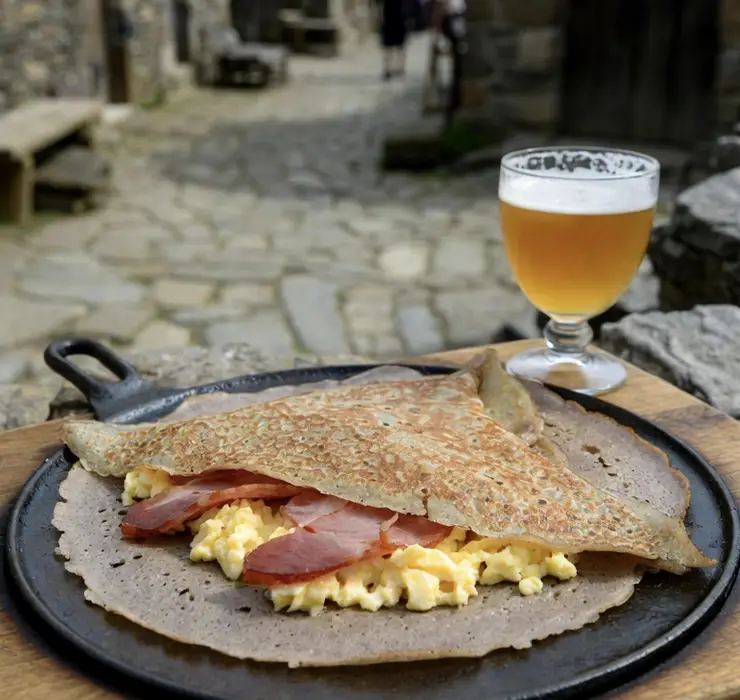
Initially a peasant staple filled with local ingredients like eggs, ham, or cheese, they were naturally complemented by dry cider from abundant apple orchards, providing a tart balance to the earthy flavors. This duo held particular relevance for Brittany’s maritime community: sailors and fishermen relied on crêpes’ portability and nutrition during voyages, while cider’s stability and vitamin content helped prevent scurvy on long sea trips, embodying the region’s seafaring resilience amid its Celtic roots and Atlantic-facing economy.
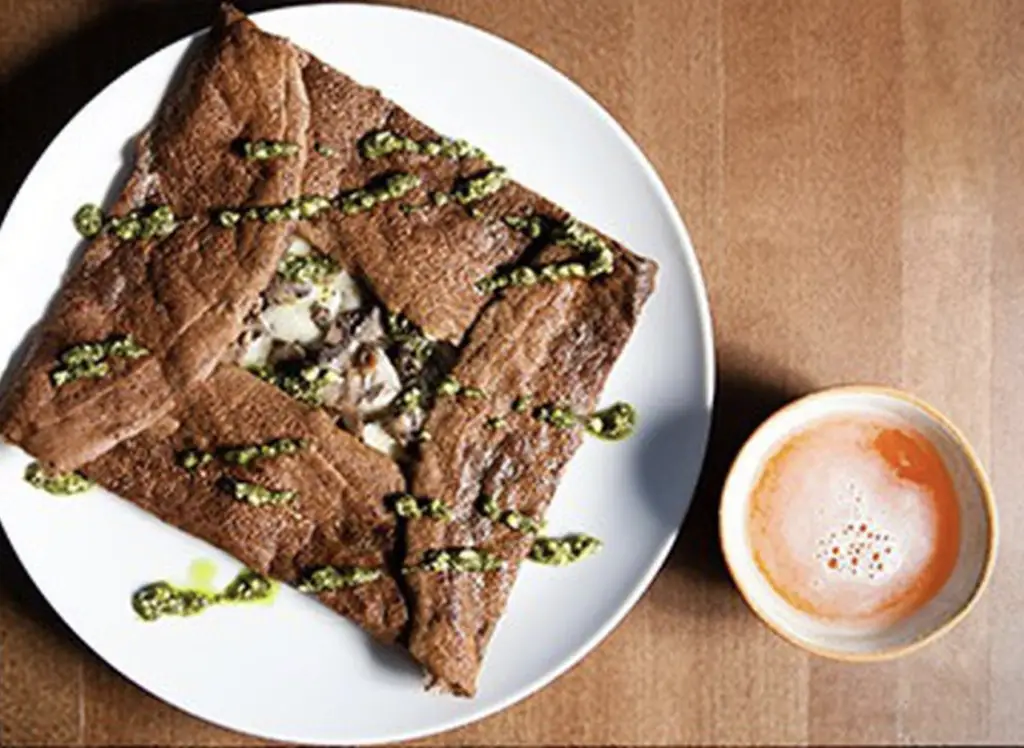
Over centuries, crêpes evolved from humble fare to a cultural icon, with savory galettes dominating Upper Brittany and sweeter wheat versions in Lower regions. Tied to rituals like La Chandeleur and festivals, they symbolized prosperity and identity amid French centralization pressures. In the 19th century, innovations like Crêpes Suzette elevated them to haute cuisine, while dry cider production flourished with AOC labels. Maritime ties deepened through coastal ports like Saint-Malo, where crêpes and cider fueled gatherings for corsairs, explorers, and emigrants, reinforcing “terroir” in a land of shipbuilding and fishing.
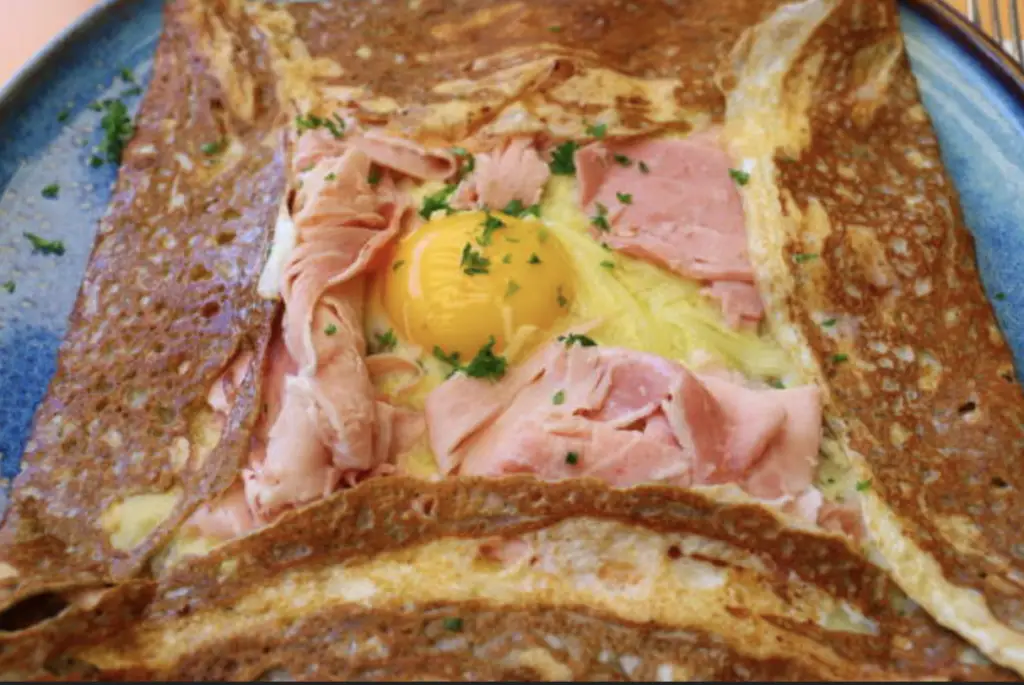
Today, this pairing remains a vibrant emblem of Breton pride, served in harbor-side crêperies during sailing events like the Route du Rhum or festivals in towns like Quiberon. Exhibitions and tourism preserve their medieval origins and maritime ethos, inviting global appreciation while sustaining local communities.
About The Author