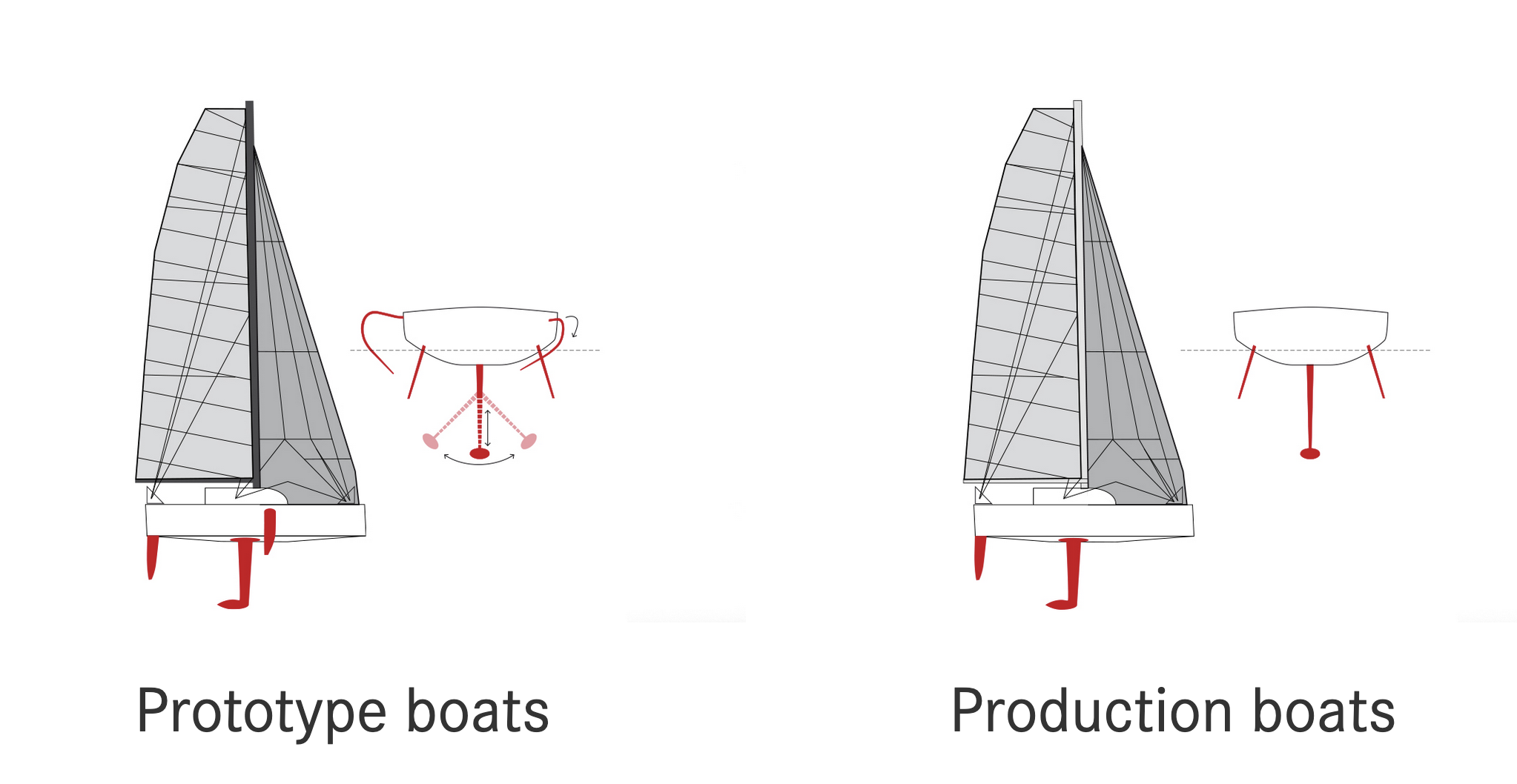
In the context of the Mini Transat race and the Mini 6.50 class (small offshore racing yachts limited to 6.5 meters/21 feet in length), the boats are divided into two main categories: the production (also called série or series) class and the prototype (proto) class. These divisions allow for a balance between accessibility for amateur sailors and innovation for advanced designs, while adhering to a basic “box rule” that caps overall dimensions and ensures safety. The key differences are outlined below-
Design and Construction
- Production Class: Boats must be series-built from approved designs, with a minimum of 10 identical units produced to qualify for the class. They use conservative, standardized materials like polyester resin for hulls and decks, and aluminum for spars (masts and booms)—exotic materials such as carbon fiber are prohibited. This keeps them simpler to build, easier to handle, and more affordable, promoting broader participation.
- Prototype Class: Custom-built one-offs that encourage experimentation and advanced technology. They can incorporate high-tech features like canting keels (which swing for better stability), water ballast, foils for lift, adjustable mast feet, and demi-scow bows. Exotic materials such as carbon fiber are allowed for hulls, decks, rudders, and spars, enabling lighter weight and higher strength.
Performance and Rules
- Production Class: Stricter regulations beyond the basic box rule limit dimensions (e.g., fixed keel depth, mast height) and innovations to control costs and ensure fairness. Boats are optimized for downwind sailing but are generally slower and more stable for less experienced sailors.
- Prototype Class: More flexible rules allow for deeper keels, taller masts, and greater sail area, resulting in boats that are approximately 6-7% faster overall. Innovations here often influence larger ocean-racing classes like IMOCA.
Cost and Accessibility
- Production Class: More budget-friendly, with a fully equipped new boat costing around €120,000. Entry into races like the Mini Transat is competitive due to high demand, often requiring a lottery for spots.
- Prototype Class: Significantly more expensive, up to €300,000, due to custom builds and advanced materials. Easier to secure a race spot as there are fewer applicants, but they require more maintenance and expertise.
In the Mini Transat, both classes race the same course but are scored separately, with prototypes typically leading in overall speed. The production class emphasizes equality and affordability, while prototypes focus on cutting-edge development.
About The Author