The Mini-Transat is a prestigious biennial solo transatlantic yacht race for Mini 6.50-meter boats, divided into prototype (proto) and series categories. First held in 1977, it emphasizes self-reliance, with sailors navigating without satellite communications or external assistance over approximately 4,000 nautical miles. The race tests endurance, seamanship, and innovation in small-boat ocean racing, often serving as a stepping stone to larger events like the Vendée Globe. It typically occurs in odd-numbered years, attracting international competitors from diverse backgrounds.
The 2027 edition, the 26th in the race’s history, is shaping up amid ongoing preparations as of early 2026. With entries still opening and qualifiers underway, the focus is on innovation in boat design, inclusivity, and environmental considerations. The race continues to draw aspiring sailors, including veterans, rookies, and those with personal stories of resilience.
Changes in the Race, Committee, Rules, and Course
The 2027 Mini-Transat features several notable updates, primarily centered on the course, reflecting efforts to refresh the event while maintaining its core challenges. The Classe Mini (the governing body) finalized these changes in early 2026, aiming to balance tradition with accessibility and sustainability.
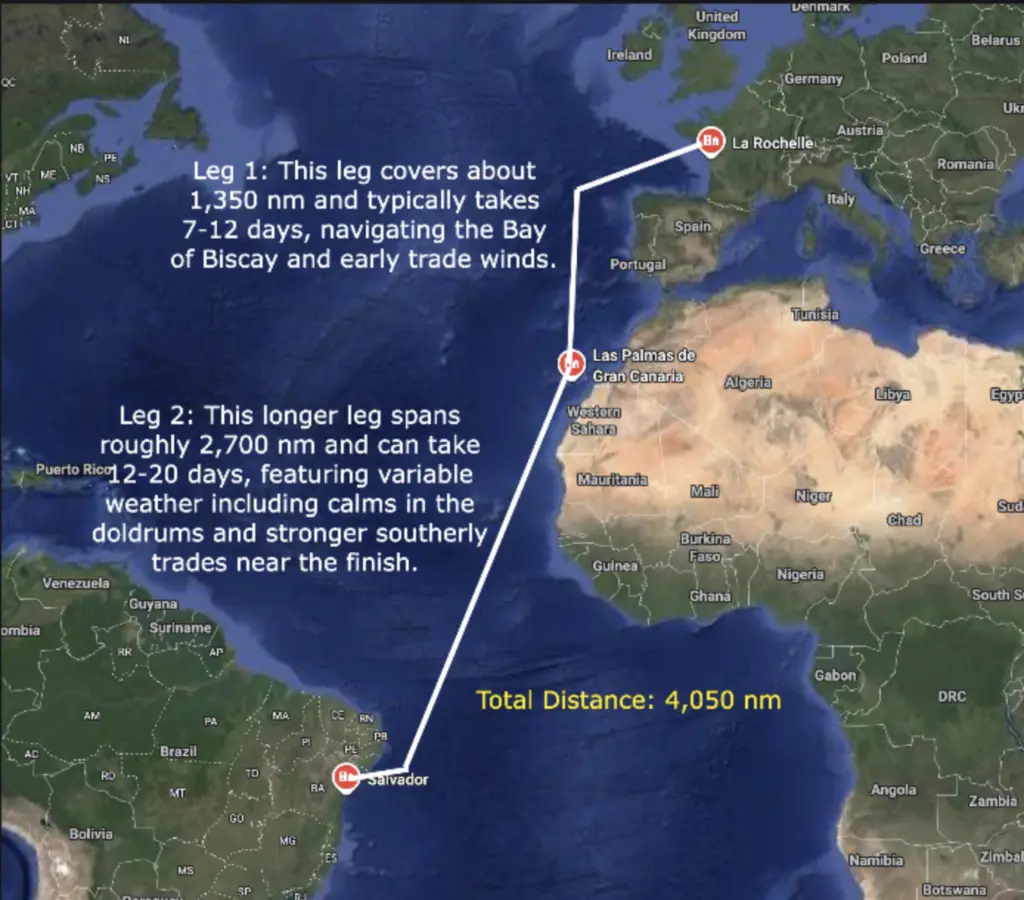
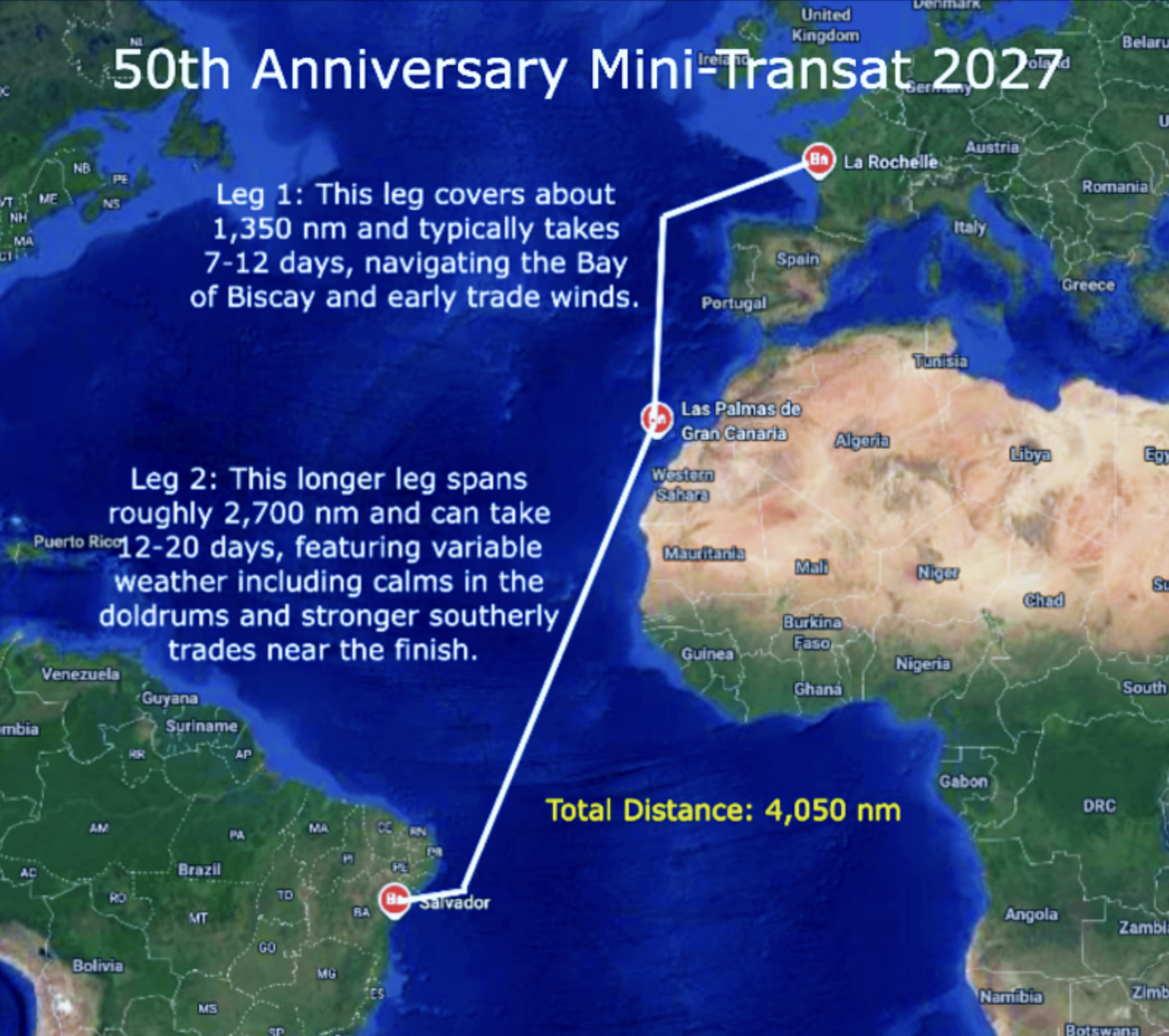
- Course Changes: A significant shift is the new route, departing from the traditional Caribbean finish and instead concluding in South America. The race will start in La Rochelle, France, with a stopover in Las Palmas de Gran Canaria (Canary Islands), before heading to Salvador de Bahia, Brazil. This marks a return to La Rochelle as the starting point (last used in 2019) and introduces Salvador de Bahia as the finish, replacing previous endpoints like Le Marin (Martinique) or Saint-François (Guadeloupe). The change aims to vary the meteorological challenges, with the southern leg potentially introducing more trade wind variability and cultural ties to Brazil’s sailing community. This route will also apply to the 2029 edition, indicating a multi-year commitment. Historically, stopovers have varied (e.g., Santa Cruz de La Palma in 2023 and 2025), but Las Palmas was selected after candidacies from locations like Gran Canaria, emphasizing logistical strengths and port facilities.
- Committee and Organizational Updates: The Classe Mini remains the primary organizing body, with no major committee overhauls reported. However, partnerships with local authorities in La Rochelle and the Canary Islands have strengthened, including enhanced logistical support for the start and stopover. Discussions within the class continue on future accessibility, such as reducing entry barriers for newcomers and addressing environmental impacts, but these are evolutionary rather than revolutionary for 2027.
- Rules Changes: Core rules persist, including the ban on real-time communications, mandatory qualifiers (1,000-mile solo sail plus 1,500 miles of ocean racing experience), and boat classifications (proto for innovative designs, series for production models). No sweeping rule changes have been announced for 2027, though the class is reflecting on sustainability—e.g., potential limits on carbon-intensive builds—and inclusivity. Ongoing debates from prior editions, like foil restrictions in protos, may influence minor tweaks, but details are pending official notices. The emphasis remains on safety and fairness, with enhanced scrutineering for new-generation foiling boats.
These adjustments come amid broader class reflections post-2025, where the Mini-Transat saw high participation but calls for evolution to attract diverse talent while preserving its grassroots ethos.
Dates, Start, and Finish Locations
- Start Date: The race is scheduled to begin in September 2027, aligning with historical patterns to leverage favorable Atlantic weather windows. Exact dates have not been finalized as of February 2026, but pre-race activities, including qualifiers and boat launches, are ramping up throughout 2026 and early 2027.
- Start Location: La Rochelle, France—a historic sailing hub returning as the departure point after recent starts from Les Sables-d’Olonne.
- Stopover: Las Palmas de Gran Canaria, Canary Islands (typically after the first leg of about 1,350 nautical miles).
- Finish Location: Salvador de Bahia, Brazil (second leg approximately 3,100 nautical miles), marking a new endpoint to invigorate the race’s appeal in South America.
The total course spans over 4,000 nautical miles, with the first leg focusing on Biscay and trade wind descent, and the second on equatorial crossing and South Atlantic navigation.
Notable News
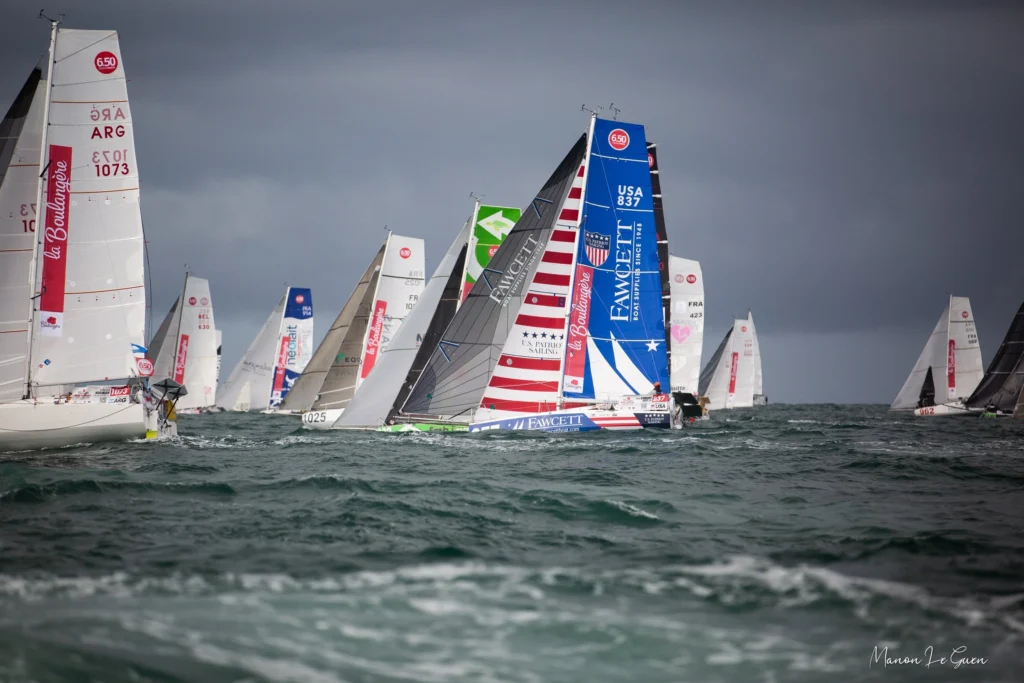
Recent developments highlight the race’s growing international profile and innovative spirit:
- Route Announcement: In January 2026, the Classe Mini confirmed the La Rochelle-to-Salvador de Bahia itinerary via Las Palmas, sparking excitement and strategic planning among teams. This shift from Caribbean finishes aims to diversify challenges and boost global partnerships.
- Campaign Launches and Boat Innovations: Several high-profile campaigns have been unveiled, emphasizing cutting-edge designs. U.S. sailor Peter Gibbons-Neff, a 2023 finisher and Marine veteran, launched his bid with a new Sam Manuard-designed full-foiling proto Mini 6.50, built by JPS Production and set for a spring 2026 debut. This reflects a trend toward advanced foiling technology in the proto class.
- Inclusivity and Charity Efforts: Stories of perseverance are prominent, such as French skipper Nathan Mesiano, who, despite losing an arm, acquired his boat “Eos” in early 2026 and is training for qualifiers, supported by local partnerships. Spanish sailor Juan Ángel Bilbao is using his campaign to raise awareness for cutaneous lymphoma, with logistical backing from Puerto Sotogrande.
- Regional Support and Talent Scouting: Cities like Cherbourg-en-Cotentin are sponsoring local talents Ethan Villain and Mathieu Rannou for the Mini 6.50 circuit leading to 2027. In Germany, a selection process is underway to choose a skipper from six candidates for a funded entry.
- Broader Context: Post-2025 reflections note sustained interest, with no major disruptions but ongoing talks on environmental measures. Candidacies for hosting, like Gran Canaria’s, underscore competitive bidding for stopovers.
Notable Entries
As of early 2026, entries are in the qualification phase, but several stand out for their profiles, innovations, or missions. The field is expected to exceed 80 sailors, blending pros and amateurs.
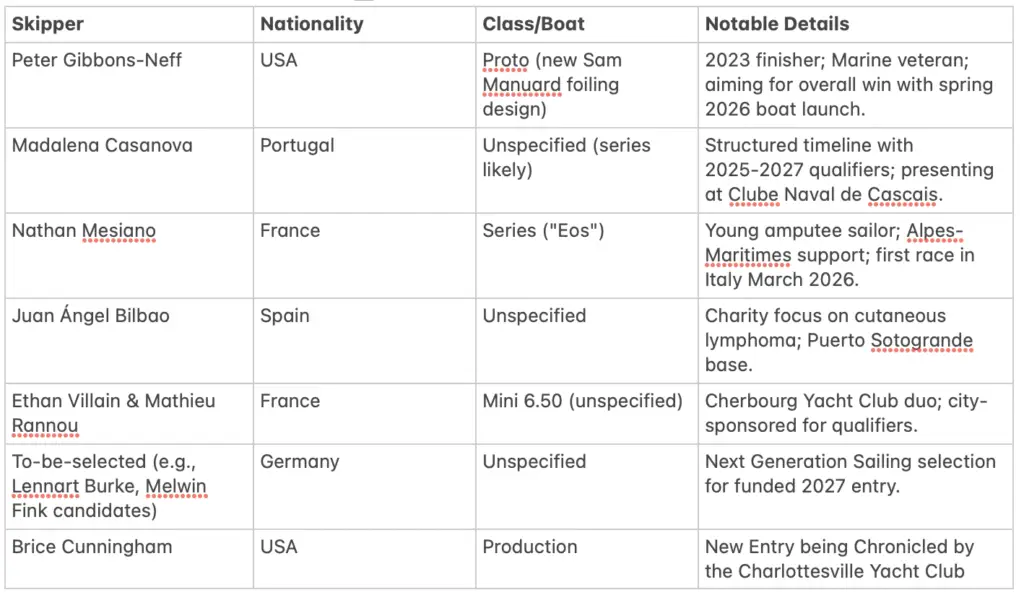
These entries highlight the race’s diversity, from tech-driven protos to inspirational personal journeys. More will emerge as qualifiers progress.
In summary, the 2027 Mini-Transat promises evolution through its new Brazilian finish and innovative campaigns, while upholding the event’s demanding spirit. As preparations intensify, it remains a beacon for solo ocean racing enthusiasts worldwide.
About The Author