Overview of the 2025 Mini Transat Race
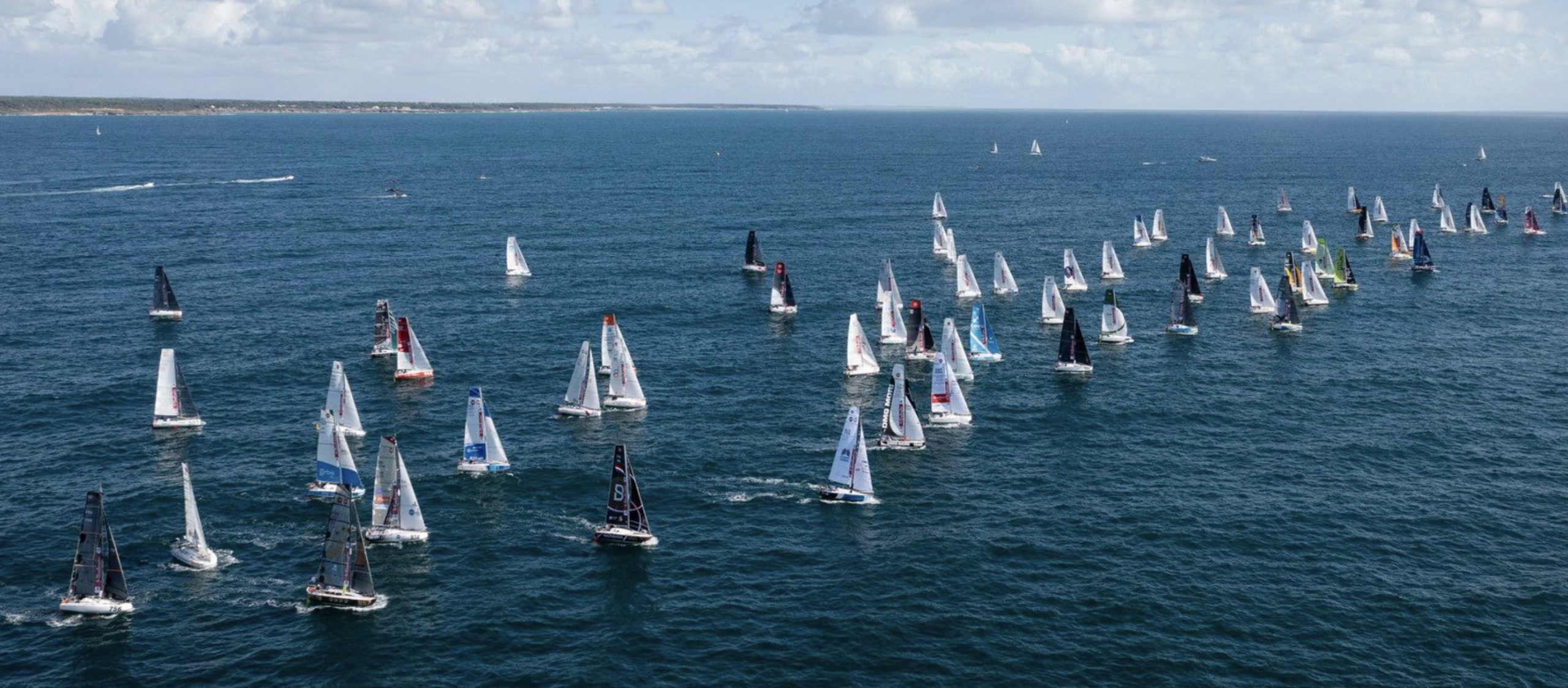
The 2025 La Boulangère Mini Transat marked the 25th edition of this iconic solo transatlantic yacht race, renowned for its grueling demands on sailors navigating small boats across vast oceans. Organized under the auspices of the Classe Mini association, the race started on September 21, 2025, from Les Sables d’Olonne, France, and consisted of two legs: the first covering approximately 1,350 nautical miles to Santa Cruz de La Palma in the Canary Islands, and the second spanning about 2,700 nautical miles to Saint-François, Guadeloupe, in the Caribbean. This biennial event (held in odd-numbered years) attracts elite solo sailors and serves as a proving ground for offshore racing talent, with many participants going on to compete in larger races like the Vendée Globe.
A total of 90 sailboats competed in the 2025 edition, divided into two categories: 33 prototypes and 57 production (or series) boats. This fleet size reflects the race’s popularity and the rigorous qualification process, where sailors must accumulate significant solo mileage in prior Mini 6.50 events to earn a spot. The high number of entries underscores the event’s status as the “gateway to ocean racing,” with participants hailing from diverse backgrounds, including professional sailors, amateurs, and even military veterans.
The Classe Mini 6.50m Racing Class
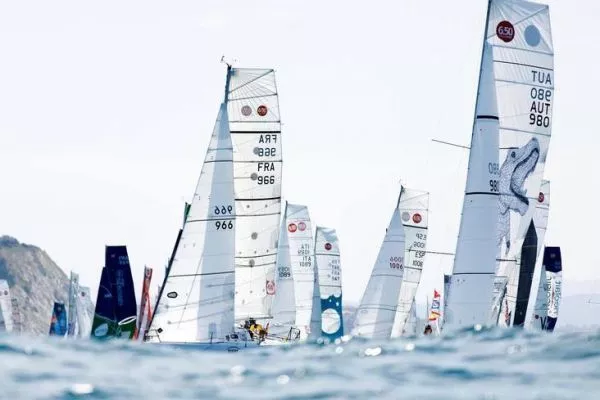
At the heart of the Mini Transat is the Classe Mini 6.50m, a development class governed by a “box rule” that mandates boats fit within dimensions of 6.50 meters in length, 3 meters in beam, and 2 meters in draft (when measured in a virtual box). This rule encourages innovation while keeping costs relatively accessible compared to larger ocean racing classes. Boats are sailed single-handed, without external communication or routing assistance beyond basic weather reports, emphasizing self-reliance and seamanship.
The class is split into two divisions to balance competition:
- Production (Série) Class: These are series-built boats from approved designs, with at least 10 units required for a model to qualify. This division limits modifications to control costs and focuses on standardized hulls, rigs, and materials. It appeals to sailors seeking a level playing field without extreme customization.
- Prototype (Proto) Class: This allows greater freedom in design, including variations in keel depth, mast height, and advanced features like canting keels or carbon-fiber construction. It’s where cutting-edge technology is tested, often pushing the boundaries of speed and efficiency.
In 2025, the Classe Mini had 265 active members, a slight dip from 300 in 2024, but with a notable increase in prototypes making up 36% of the fleet (up from 26%). The class is increasingly emphasizing sustainability and accessibility, with ongoing discussions about reducing environmental impact through eco-friendly materials and promoting inclusivity for new entrants. Training centers, such as those in Concarneau, France, play a key role in preparing sailors, and the circuit includes preparatory races like the Plastimo Lorient Mini 6.50 and Mini Petrolera.
Relevant Production Boats
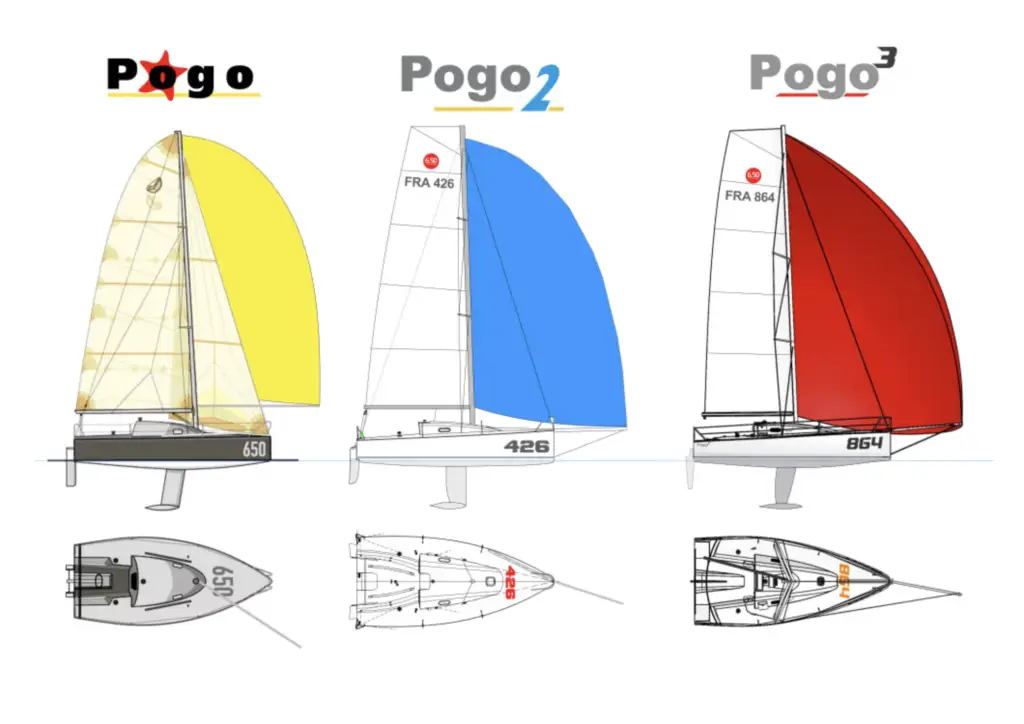
The production class in 2025 featured a mix of established designs optimized for reliability and performance in varied conditions. Key models included:
- Pogo 3: A popular choice for its balance of speed and durability, often favored by sailors aiming for consistent results across legs.
- Vector 6.50: Known for its robustness in heavy weather, this design was used by Italian sailor Nicolò Gamenara on Red Hot Mini Pepper. Vectors perform well in downwind conditions but may concede speed to “maxi” designs in lighter airs.
- Wip (Forward WIP): A newer Italian design by Oris d’Ubaldo, which only achieved series status weeks before the race after meeting the 10-unit production threshold. Cecilia Zorzi raced one named Eki, highlighting its potential in load-bearing winds despite being less proven than older models.
- Raison-Maxi Designs: Predicted to dominate the series category due to their optimized hull shapes for speed, these “maxi minis” like the Maxi 650 were seen as frontrunners, reflecting trends toward broader, more stable platforms.
Overall, production boats emphasized affordability and series consistency, with costs typically lower than prototypes, making them ideal for budget-conscious teams or first-time transatlantic sailors.
Prototype Boats and New Developments
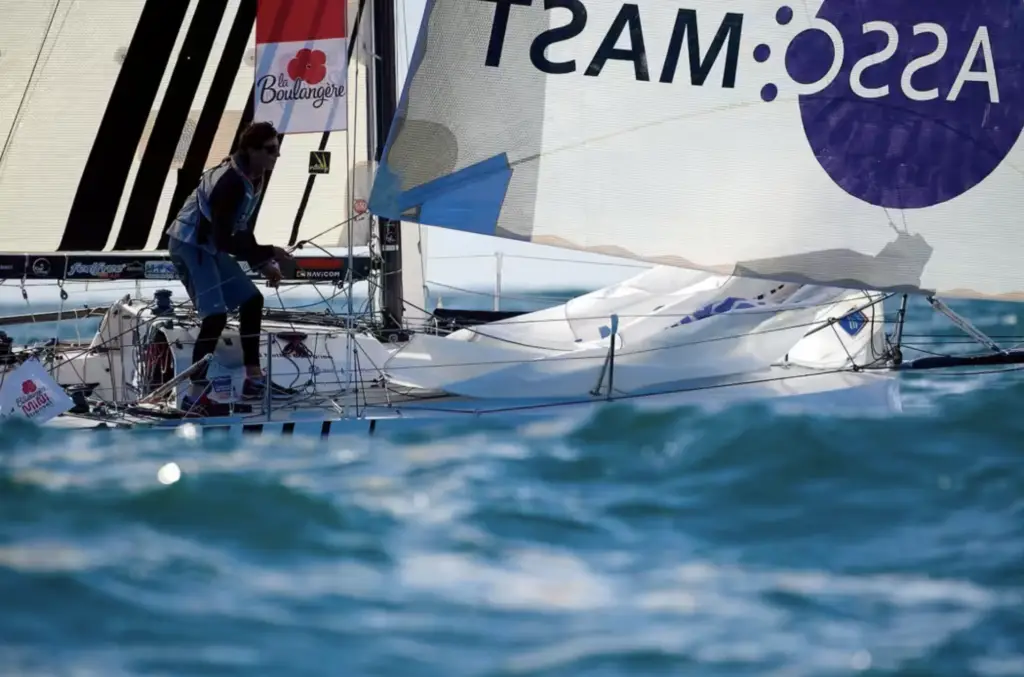
Prototypes stole the spotlight in 2025 with their innovative features, allowing for aggressive experimentation. Standout boats included:
- Mathis Bourgnon’s winning prototype, a high-tech design incorporating advanced foils and carbon construction, which enabled superior speeds (averaging 7.89 knots over the second leg).
- Benoît Marie’s boat, which set a new 24-hour distance record on October 29, covering impressive mileage through optimized routing and foiling capabilities.
- Other notables like Felix Oberle’s Big Bounce – Beltrona and U.S. sailor Emma Hasson’s On the Road Again II, both showcasing DIY modifications and resilience.
New developments in the prototype class focused on foiling technology and sustainability. Full-foiling prototypes, such as Sam Manuard designs, were teased for future races (e.g., a U.S. campaign for 2027), but in 2025, partial foils and canting keels were prevalent, enabling boats to “fly” in certain conditions for speed gains. The class saw a surge in proto participation, driven by post-2023 innovations like improved hydrodynamics and lighter composites. Efforts toward eco-friendliness included exploring bio-based resins and recyclable materials, aligning with the Classe Mini’s push for a “more sustainable future.”
Notable Accomplishments
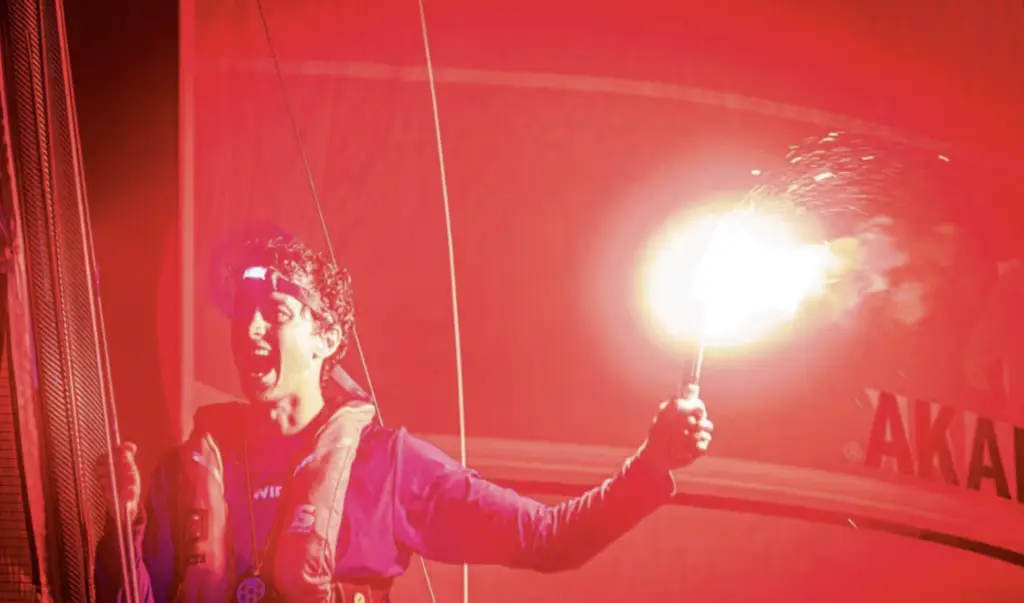
The 2025 race produced several milestones:
- Mathis Bourgnon (Switzerland) won the prototype division after 13 days, 17 hours, 24 minutes, and 45 seconds on the second leg, finishing with a 25-nautical-mile lead. This victory echoed his father Yvan’s 1995 win, marking Switzerland’s entry into the elite proto winners’ circle (previously dominated by France, with exceptions like Uruguay’s Federico Waksman in 2023 and the U.S.’s Norton Smith in 1979).
- Benoît Marie (France) broke the 24-hour distance record in a prototype, averaging 14.9 knots at times, though he finished second overall.
- Joshua Schopfer (Switzerland) achieved 5th in the series class on Mingulay, just 7 hours behind the winner, fulfilling a personal dream amid a competitive field.
- Emma Hasson (USA) placed 6th in the prototype first leg, overcoming a wrecked prior boat and self-built challenges.
- Swiss sailors excelled overall, with Felix Oberle finishing 6th in prototypes, highlighting the nation’s rising prominence.
Past Italian successes (e.g., Luca Rosetti’s 2023 series win) inspired 2025 entrants like Zorzi and Gamenara.
Notable Problems Faced by Racers
The race’s extreme conditions led to several challenges:
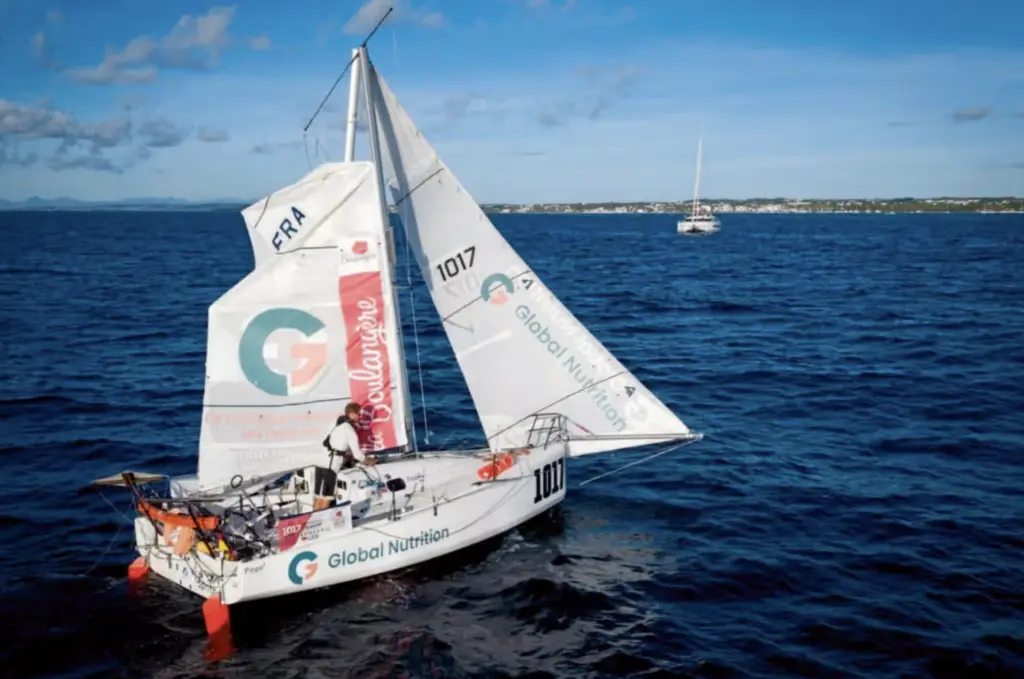
- Mast Breakages: At least one prototype suffered a dismasting, echoing historical issues (e.g., Yves Le Blevec’s 2005 withdrawal).
- Technical Issues: Benoît Marie encountered a problem off Cape Verde after his record run, forcing tactical adjustments.
- Weather Challenges: Light winds at the second leg’s start, squalls, and a northern depression required detours around Cape Verde, testing routing skills. Some sailors faced equipment failures from high speeds and waves, with dropouts reducing the fleet from 90 starters to 87 finishers in some reports.
- Physical and Mental Strain: Solo navigation over 30 days in 21-foot boats amplified fatigue, with reports of DIY repairs mid-ocean.
Countries with Entries
France dominated with the majority of the 90 entrants, but international diversity was strong, with 32 participants from outside France and 15 women overall. Key countries included:
- Switzerland: Strong showing with winners like Mathis Bourgnon and top finishers (Oberle, Schopfer).
- Italy: Cecilia Zorzi and Nicolò Gamenara represented, building on recent podiums.
- United States: Emma Hasson highlighted American determination.
- Romania: Bogdan Grigorescu became the first Romanian starter, aiming to inspire national offshore racing.
- Others: Entries from Uruguay (past influence), Spain, and emerging nations like South Africa (though more prominent in related classes).
Notable Information on Sailboat Racing Teams
Teams in the Mini Transat are often individual or small-scale operations, supported by sponsors and training hubs. Notable aspects:
- Sponsorship and Campaigns: Many sailors run multi-year projects, like U.S. Marine veteran Peter Gibbons-Neff’s 2027 bid with a full-foiling proto, or Romanian Bogdan Grigorescu’s four-year preparation via Concarneau’s training center.
- Veteran Returns: Figures like Yves Le Blevec (three-time participant) returned as race directors or mentors, fostering the next generation.
- Inclusivity Efforts: The class promotes mixed doubles formats in qualifiers (e.g., Plastimo Lorient with 85 entries) to boost participation.
- Global Appeal: With builders in 37 countries for related mini classes (e.g., Globe 5.80), the Mini Transat influences broader small-boat racing, including parallel events like the Mini Globe Race.
The 2025 race reinforced the Mini Transat’s legacy as a raw, innovative test of human endurance, setting the stage for even more advanced designs in 2027.
About The Author